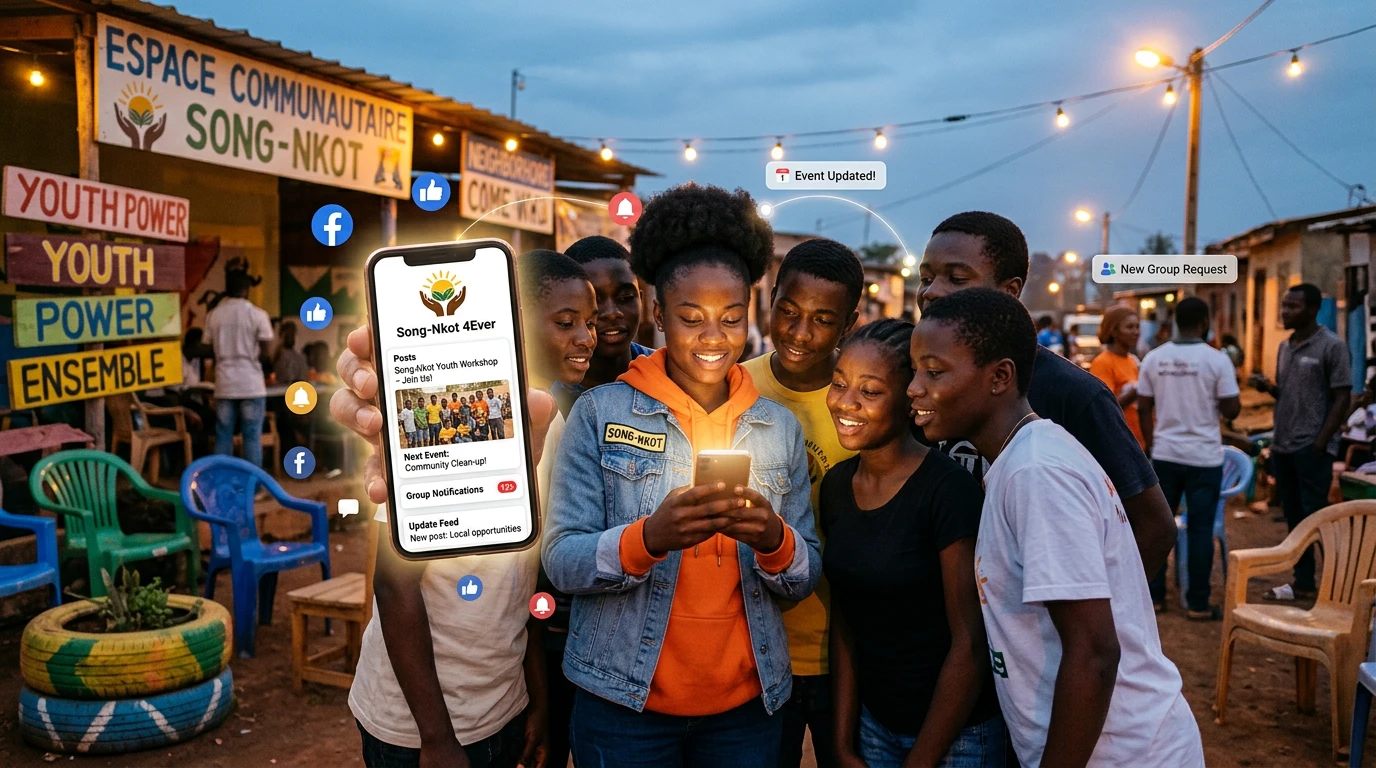
For an organization such as Song-Nkot 4Ever, the web is more than a brochure: it can connect members, make action visible, collect contributions and turn scattered information into participation. Technology, however, does not replace trust or human facilitation.
In this article
- 1. Begin with existing relationships
- 2. Build a source of record
- 3. Turn every publication into an invitation
- 4. Give young people a real role
- 5. Give each channel a function
- 6. Establish a simple editorial cycle
- 7. Protect people and trust
- 8. Measure what truly changes
- Key takeaway
- Four-week community campaign example
1. Begin with existing relationships
A community does not begin with a website. It already exists in families, neighborhoods, messaging groups, activities and meetings. The web should make those relationships easier to understand, join and activate.
Map audiences: active members, alumni, young people, parents, partners, volunteers and diaspora. For each, identify the information they need and the action they can take.
2. Build a source of record
Instant messages move quickly but disappear. The website should preserve lasting information: mission, leaders, calendar, reports, projects, participation rules, needs and results. Every social post should be able to link back to this stable source.
3. Turn every publication into an invitation
A useful update answers five questions: what happened, why it matters, who participated, what changed and what comes next? End with a clear invitation to register, suggest an idea, volunteer, share a skill or support a project.
4. Give young people a real role
UNICEF describes U-Report as a platform where young people share opinions, access information and act on issues affecting them. The local lesson is important: participation is not simply receiving announcements. It includes feedback, response and visible influence on decisions.
Create a small youth editorial team. Entrust interviews, photographs, reports and topic proposals to it, with clear consent and safeguarding rules.
5. Give each channel a function
- Website: official reference and memory.
- Newsletter: regular summary and direct relationship.
- Messaging: rapid coordination and reminders.
- Social media: discovery, conversation and recognition.
- Meetings: sensitive decisions, listening and cohesion.
Do not publish exactly the same message everywhere. Adapt format while keeping one source of truth.
6. Establish a simple editorial cycle
Each month: announce the program, document one activity, feature one member, publish one result and remind people how to participate next. Assign a calendar, owner and approval date.
7. Protect people and trust
Obtain consent before publishing images or testimonials, especially involving minors. Minimize collected data, define who can access forms and explain how information is used. Moderate discussions with known rules.
8. Measure what truly changes
Do not stop at likes. Track registrations, attendance, proposals, mobilized volunteers, contributions, partnerships and people who return to several activities. Ask one simple question: “How did you hear about this action?”
Key takeaway
The web mobilizes when it connects reliable information to an accessible action and shows members that participation produces an effect.
Four-week community campaign example
- Week 1: publish the need and collect ideas with a short form.
- Week 2: share the summary and present two possible actions.
- Week 3: open registration, assign roles and restate rules.
- Week 4: deliver the activity, document results and recognize contributions.
The project page remains the reference throughout. Messaging groups coordinate without becoming the sole holder of information. The final report states what happened, what limitations appeared and what comes next.
“Digital engagement becomes useful when reliable information leads to a clear action and people can see the effect of their participation.”
ALLFORWEB Method
Let’s grow together
Turn your digital presence into meaningful participation
Let’s clarify your audiences, channels and calls to action so your online presence supports real community outcomes.