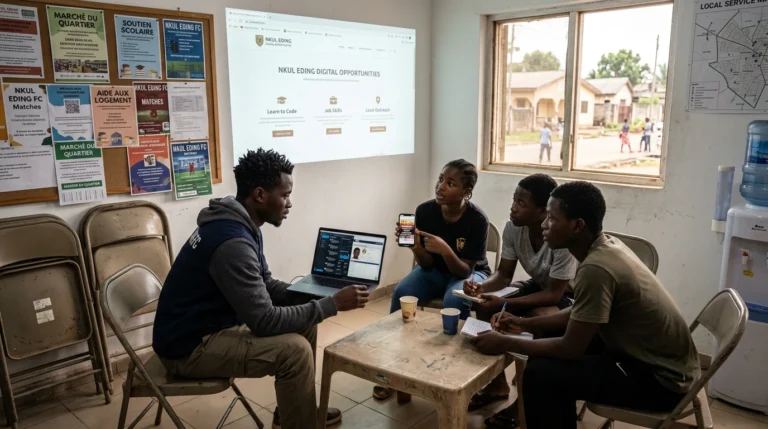
During more than ten years as president of a youth association, I learned that leadership does not come from a title. It develops when other people trust us with their expectations, disagreements, mistakes and sometimes their dreams. Growing up in a modest family in Cameroon, taking responsibility early for my younger sister, and later serving in community, sporting and professional settings shaped the way I lead. These are practical big-brother lessons—not a perfect formula, but a posture for remaining credible, demanding and humane over time.
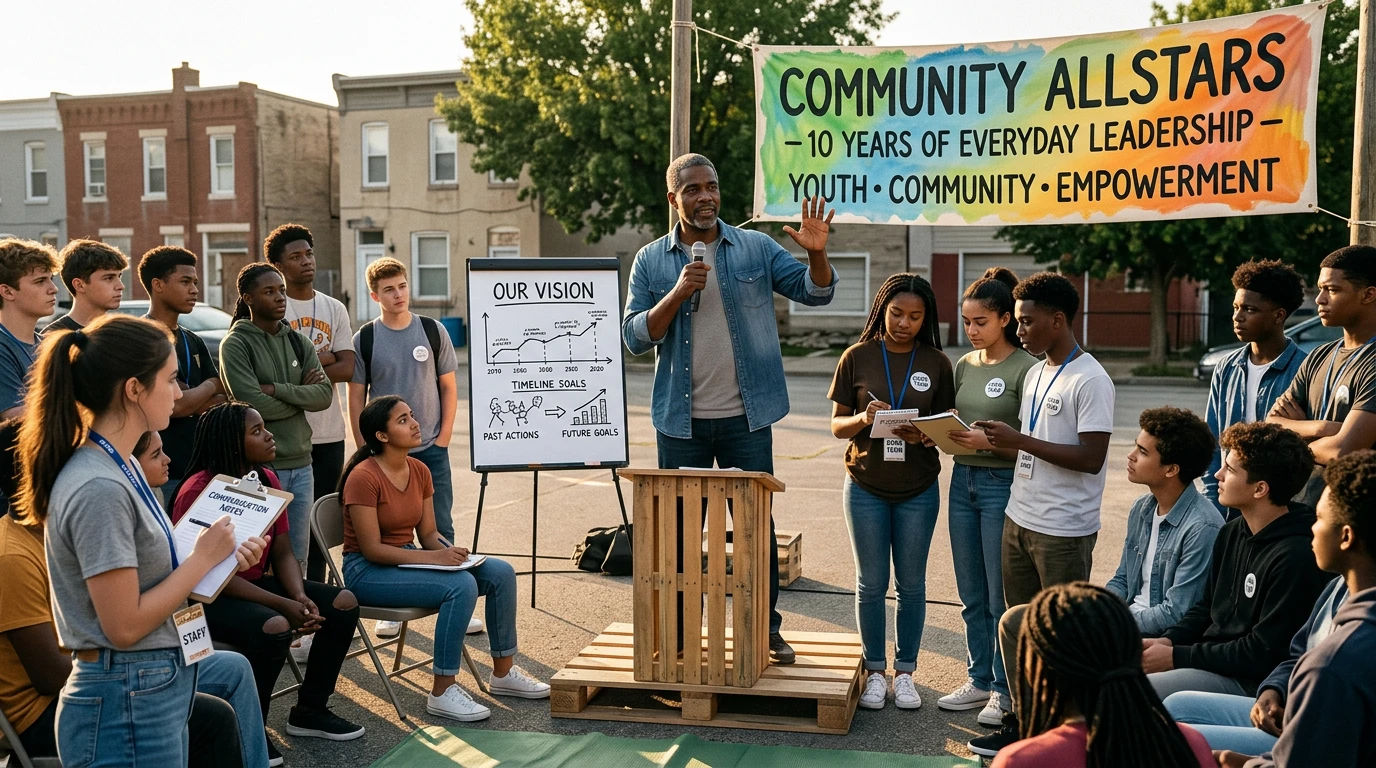
In this article
- Serve before seeking visibility
- Listen to the least visible voices
- Turn values into visible habits
- Give responsibility that develops people
- Make decisions without humiliating people
- Protect trust through a safe framework
- Recognise invisible work
- Remain consistent when enthusiasm falls
- Prepare other people to take the light
- Key takeaways
Serve before seeking visibility
Association leadership begins with service. The president is not there to occupy the whole stage, but to help the group understand its mission and make progress. Visibility can support an activity, yet it cannot replace quiet work or trust.
Before an event, one question helps preserve direction: who should genuinely benefit from what we are preparing? It moves attention beyond the final photograph and tests whether time, money and energy answer a need people understand.
This posture separates the role from the person. A mandate may end; the responsibility to respect people, keep commitments and leave a stronger organisation remains.
Listen to the least visible voices
At the beginning of a mandate, a leader may believe they must quickly provide every answer. Over time, I learned that the first responsibility is often to ask better questions. Why do some young people participate once and disappear? What constraints limit their involvement? What would give them a genuine place?
Listening does not mean accepting every request. It means understanding reality well enough to explain a decision honestly. A young person who feels heard can accept a reasoned refusal; someone who discovers a completed decision in a group message may mainly remember that their voice did not count.
Small groups, individual conversations or an anonymous form can help people who speak less. Some people do not lack ideas; they lack a space where the loudest voice does not immediately decide for everyone.
Turn values into visible habits
A phrase such as “develop young people” is inspiring but too broad to guide everyday work. Translate it into observable behaviour: welcome a new member properly, respect time, safeguard participants, share information and account for spending.
Leaders set the tone in details. If they expect punctuality, they prepare the meeting on time. If they promote transparency, decisions and expenses remain understandable. Young people observe consistent habits more closely than beautiful speeches.
Choosing a few priorities for a defined period prevents the team from spreading itself too thin. A popular activity may need to change or stop when it no longer serves the mission. Consistency sometimes requires that courage.
Give responsibility that develops people
Delegation is not transferring a difficult task and returning on results day. Clarify the objective, boundaries, resources, deadline and decision level, then agree on a useful review point.
The responsibilities I took on early for my sister, ten years younger than me, taught me that support is not limited to giving instructions. It requires checking, reassuring, allowing someone to try and remaining available. The same principle applies when a young person leads an activity for the first time.
A mission important enough to create pride can still be limited enough to enable learning. After the action, a simple review—what worked, what should improve and what the person wants to try next—turns a mistake into a step rather than a label.
Make decisions without humiliating people
An association brings together different personalities, generations and ambitions. Disagreement does not automatically prove that leadership has failed. The risk appears when frustration circulates only in corridors, private groups or indirect social-media posts.
Address facts before intentions, listen separately when tension is high, and return the discussion to concrete impact and shared rules. Humiliating someone publicly may obtain silence without restoring trust.
Leaders must still decide. When safety, respect or financial integrity is involved, consensus cannot become an excuse to wait indefinitely. Kindness is not the absence of boundaries; it is a humane and explicit way of applying them.
Protect trust through a safe framework
Working with young people requires particular attention to safeguarding, permissions, suitable supervisors, transportation, photographs, personal data and reporting mechanisms. These rules should be known before the activity.
Inclusion also requires noticing who remains outside. Barriers may be financial, linguistic, physical, family-related or digital. In Cameroon, transport or mobile-data costs may limit participation; in Canada, work schedules, distance or integration may have a comparable effect.
Asking what would genuinely enable contribution prevents the team from confusing a constraint with a lack of motivation.
Recognise invisible work
In football, the goalscorer naturally receives applause, yet the move may have begun with a well-positioned defender. Associations work the same way. The person holding the microphone is visible; the person checking attendance, storing equipment, calling parents or preparing the budget is far less so.
Useful recognition names the contribution and its impact. It may be a personal message, a recommendation, a training opportunity or a new responsibility. Not everyone wants to stand on stage.
Recognition must remain fair. It should not reward only a leader’s friends or the people who are always available; it helps every member understand that their effort matters to the collective mission.
Remain consistent when enthusiasm falls
Launching a project often attracts more energy than following it through. Everyday leadership becomes visible when enthusiasm falls: keeping appointments, answering questions, documenting decisions and completing what was promised.
Consistency does not mean maintaining an activity that no longer works. It means observing, explaining adjustments and remaining dependable in the way decisions are made. A team accepts change more readily when it understands what was learned and what remains important.
This credible rhythm also protects the leader from trying to carry everything alone. Shared consistency is stronger than a succession of heroic efforts nobody can sustain.
Prepare other people to take the light
Leadership that makes a group dependent on one person may look strong, but it remains fragile. Succession begins by sharing information, contacts, methods and the right to decide.
Invite emerging leaders into important meetings, explain the reasoning behind choices and gradually let them lead activities. Simple documentation—calendar, access, partners, sample budget, safeguarding rules and lessons learned—supports the transfer.
I deeply respect the elders who opened paths. Our success gains greater meaning when we help those coming after us go further. What is the point of growing if we do not help our environment grow?
Key takeaways
My leadership keys fit into a few verbs: serve, listen, set an example, empower, decide, protect, recognise, remain consistent and hand over.
They do not make every choice easy. They prevent the title from becoming more important than the mission and remind us that authority is earned through the way people are treated when the project becomes difficult.
We were all born to shine. A leader’s role is not to keep all the light, but to help other people discover theirs and pass it on in turn.
“Leadership is not about keeping the light on yourself; it is about helping other people discover their own.”
ALLFORWEB Method
Let’s grow together
Do you support young people or an association?
Let’s discuss participation, responsibilities and succession to identify a practical framework suited to your group and its resources.