
A small football club can create significant value on the pitch while remaining almost invisible beyond its immediate community. A structured digital presence is not about publishing more. It makes information trustworthy, players easier to understand, the community easier to mobilise, and partnerships easier to demonstrate.
The right system connects an official website, a small number of chosen social platforms, simple editorial rules and understandable indicators. It must remain manageable for a small team even when volunteers or officers change.
In this article
- Why digital presence has become strategic
- Website and social media: complementary roles
- Make players, results and pathways visible
- Create value for sponsors and partners
- Build identity and organise content
- Measure visibility and engagement
- Govern publishing and access
- Deliver a realistic 90-day plan
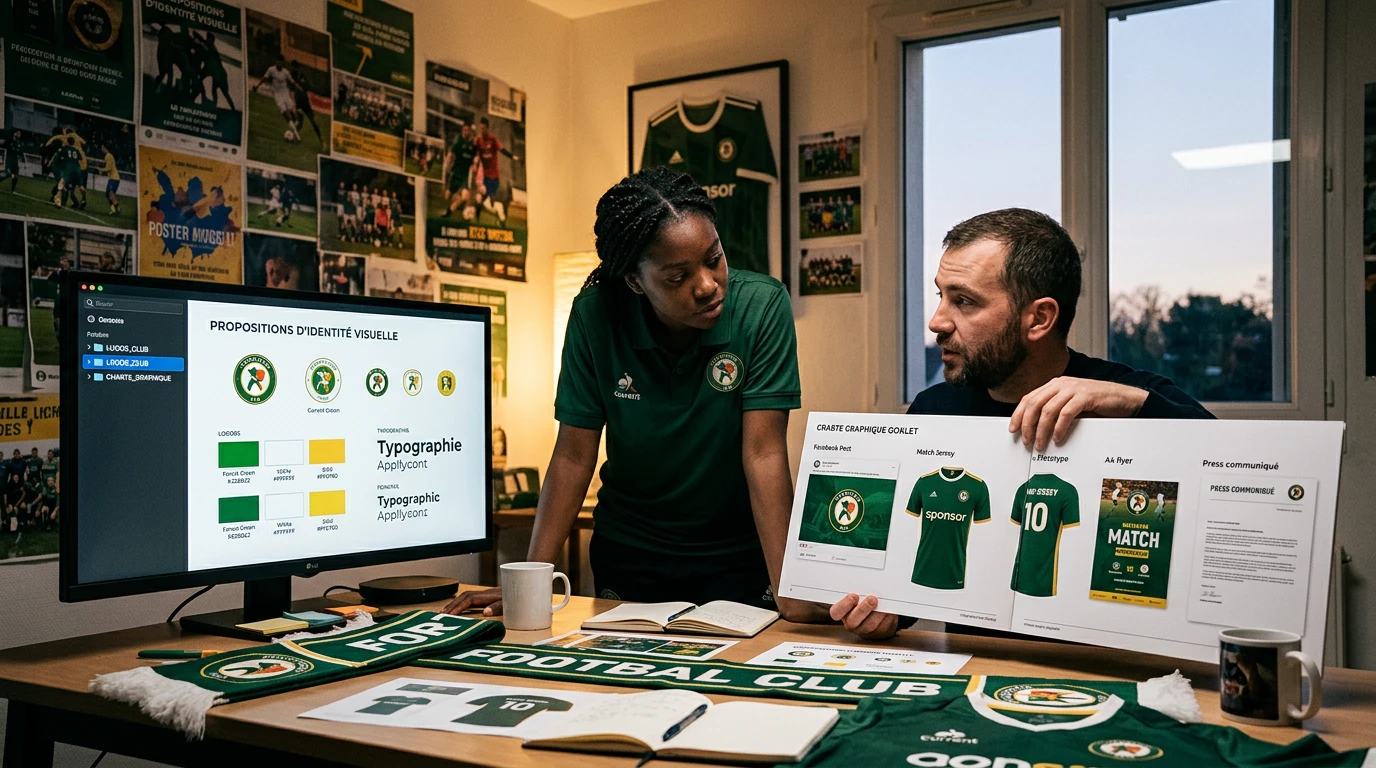
A useful digital presence connects identity, sporting performance and partners.
Understand the real need
Digital presence has become an infrastructure for trust. Before attending, proposing a partnership or recommending a player, people look for evidence: fixtures, results, recent images, contacts, club identity and consistent information. When these elements are missing or contradictory, the club appears less active than it really is.
The priority is therefore not a race for followers. It is to make the club findable, understandable and credible for players and families, supporters, volunteers, local media, scouts and partners. Each audience needs different information, but all should recognise the same organisation.
A structured presence also protects the club's memory. Results, pathways, events and partnerships no longer disappear with a volunteer's phone. They become an editorial asset that the next team can maintain.
Define a useful objective
The website should remain the official source for teams, fixtures, results, important news, partners, contacts and operating information. A stable page can be found through search, cited in a proposal and updated without losing its address.
Social networks mainly support distribution and conversation. They attract attention before a match, tell the story of a key moment, relay a new publication and lead people back to the official source. Their reach varies, so the club should not entrust essential information to them alone.
A simple rule prevents duplication: the website stores the reference version, while each network adapts the format to its audience. One result can become a full website story, a concise Facebook visual, a short Instagram sequence and a professional link for partners.
Observe the context before choosing
A useful player profile is neither an inflated CV nor a recruitment promise. It presents verifiable facts: sporting identity, position, team, season, pathway at the club, available statistics and authorised media. The last update date should be visible so profiles do not silently become obsolete.
Image and video quality matter, but context matters more. A short clip should identify the match, date, opponent and action. A highlight compilation without reference points may look impressive but provides little value to someone assessing a player's development.
For minors, the club must define consent, limit personal data and avoid information that could expose a child unnecessarily. Visibility must never override safety, dignity or applicable safeguarding rules.
Results should follow a stable method: competition, round, opponent, score, venue and date. A consistent format improves readability and reduces errors. When individual statistics are available, the club should state their source and scope rather than mixing training sessions, friendlies and official matches.
Pathways give meaning to numbers. Showing the progression of a team, the development of a young player, the contribution of a coach or the return of a former player demonstrates how the club creates value beyond one score.
A well-organised archive also helps media and partners find reliable information quickly. The club avoids answering the same questions repeatedly or rebuilding its history every season.
Organize roles and resources
A partner is not only paying for a logo placement. It wants a credible association, a relevant audience and evidence of visibility. The club should describe what it can actually deliver: presence on selected pages, identified posts, event visibility or jointly produced content.
Each commitment should be measurable without pretending to impossible precision. A report can include reach, views, interactions, clicks, visits to a partner page, registrations or event attendance. Isolated screenshots are not enough; the period, platform and content must be clear.
Consistency increases value. A partner will often prefer a simple activation delivered throughout the season to a spectacular promise delivered once. A shared calendar and periodic report turn the relationship into a partnership that can be managed.
Move from the idea to a first test
Digital identity translates what the club wants to represent. Logo, colours, typography, tone and image choices should remain recognisable without making every publication identical. A short guide is enough when it defines essential uses and gives practical examples.
The tone should fit the club: demanding around performance, respectful towards opponents, clear with families and professional with partners. Wins can be celebrated without humiliating others; defeats can be explained without singling out a player.
A shared library of approved logos, templates and images reduces improvisation. It also prevents version errors and enables several contributors to produce coherent content.
The editorial rhythm must match real resources. A small team can begin with three sequences: pre-match information, the result, and one club-life story between fixtures. Each item has an owner, deadline and appropriate approval.
A simple calendar separates predictable content from opportunities. Fixtures, matches, anniversaries and reviews can be prepared in advance, while spontaneous moments remain possible without disrupting the system.
Capture should be planned before the event: who takes images, which shots are required, which permissions exist and where files will be stored. This prevents missing photos and personal accounts from becoming the club's archive.
Measure what actually changes
Measurement does not mean tracking every available number. The club selects a few indicators tied to its objectives: visits to team pages, contact searches, content engagement, clicks to partners, registrations or enquiries.
A baseline enables comparison. For one month, the team records the current level; it then tests one precise change and observes the result. Google Analytics can show how people find and use the website, while native social insights describe reach and interaction on each platform.
The monthly review must lead to a decision: continue, adjust or stop. A widely viewed post with no connection to an objective may be less useful than a quieter page that generates registrations or qualified contacts.
Avoid the most common mistakes
Governance specifies who proposes, approves, publishes and corrects. Sensitive announcements about selection, discipline, incidents, partnerships or minors require stronger approval than a fixture reminder.
Accounts should belong to the club, not one individual. Multi-factor authentication, limited permissions and an offboarding process protect continuity. The list of accounts, owners and access rights should be reviewed whenever the season or team changes.
The club also needs a correction process. Who responds when a score is wrong, an image is challenged or an account is compromised? A quick, documented and respectful response protects trust better than prolonged silence.
Build a sustainable method
During the first 30 days, the club inventories accounts, clarifies audiences, secures access and defines the website as the official source. It updates essential information: contacts, teams, fixtures and partners.
The next 30 days establish the rhythm through simple templates, a calendar, responsibilities and a capture method. The club publishes less but more consistently and begins recording baseline indicators.
During the final month, the team reviews useful content, corrects weaknesses and prepares a first report for officers and partners. Success is not the volume of posts; it is a system the team can maintain, hand over and improve.
“A useful digital presence does not seek attention alone: it turns the club's work into reliable evidence for players, the community and partners.”
ALLFORWEB Method
Let’s grow together
Is your club ready to turn visibility into practical results?
Let’s clarify your audiences, content, player profiles and the evidence your partners expect.