Community projects rarely fail because people lack goodwill. They struggle when responsibilities are unclear, information is scattered and no one can see what must happen next. Combining association leadership with practical IT discipline helps a team turn shared intentions into work that can be coordinated, secured and handed over.
Technology is not the leader of the project. It supports leadership by making decisions, owners, deadlines and evidence visible. The useful question is therefore not “Which tool should we buy?” but “What must our people be able to understand and accomplish together?”
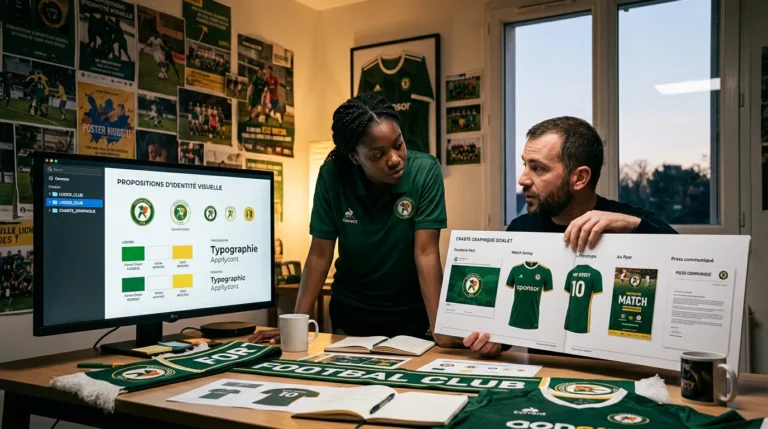
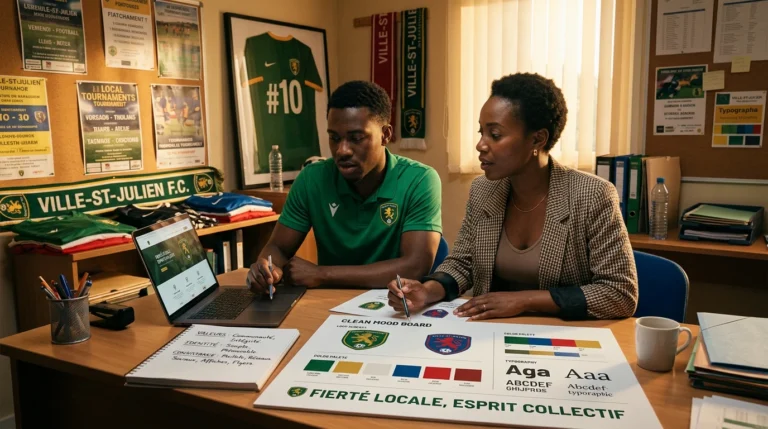
A useful digital presence connects identity, sporting performance and partners.
Connect purpose to delivery
An association begins with a mission, but a project needs an observable result. “Support young people” is a purpose; “run six documented workshops for 90 participants before December” is a deliverable. Translating purpose into a result gives the team a common reference without reducing the human meaning of the work.
The project brief should state the problem, beneficiaries, expected change, scope, constraints and sponsor. It should also say what the project will not do. This boundary protects a volunteer team from accepting every useful idea at once.
Digital tools then record the plan and evidence. They do not replace conversations with members or beneficiaries. A good system helps the team return to those conversations with clearer facts.
Clarify decisions and responsibilities
Many projects have activity but no decision structure. A task may have several helpers yet no accountable owner. Define who proposes, who decides, who performs the work and who must be informed. One person can hold several roles, but every important decision needs a named owner.
Use simple decision rules. Routine expenses or editorial updates may follow a lightweight approval, while safeguarding, contracts, personal data or public incidents require stronger review. The rule should be known before urgency puts pressure on the team.
A short decision log prevents the same debate from returning every month. It records what was decided, why, by whom and when it will be reviewed.
Build one reliable information system
Files spread across private email, messaging apps and personal drives create hidden risk. The team needs one managed location for current documents, with a clear folder or library structure and agreed naming rules.
Each important record should have an owner and a reference version. Meeting minutes, budgets, participant lists and partner documents must not compete with several “final” copies. Links to the reference are safer than sending new attachments repeatedly.
Not every message belongs in the archive. Separate quick coordination from durable records. When a message contains a decision, move the decision into the shared system where authorised people can find it later.
Choose tools the team can sustain
The best tool is not the one with the longest feature list. It is the one the team can afford, understand, administer and transfer. Evaluate access on ordinary phones, connectivity constraints, language, training needs, export options and support.
Start with the minimum set: a managed identity, shared documents, a task view and a communication channel. Add forms, automation or dashboards only when a repeated need is clear.
A two-week pilot reveals more than a theoretical comparison. Ask a small group to complete real work, then observe confusion, missing information and manual workarounds before expanding.
Protect access and community data
Associations often handle contact details, attendance, photos, financial records or information about minors. Collect only what the project needs, explain the purpose and limit access to the relevant roles.
Accounts should belong to the organisation. Enable multi-factor authentication, avoid shared passwords and review permissions when responsibilities change. A former volunteer should not retain access simply because no one remembered to remove it.
Backups and recovery must be tested, not assumed. The team should know who can restore a deleted file, respond to a compromised account and contact affected people when an incident occurs.
Coordinate volunteers without overload
Volunteer capacity is variable. Plan work in short cycles with a visible priority list. Each task needs an owner, deadline, next action and definition of done. Limit simultaneous work so unfinished tasks do not become invisible commitments.
Meetings should resolve obstacles and decisions, not reproduce information already available in the project space. A concise written update allows absent members to understand progress without another meeting.
Design for contribution at different levels. Some volunteers can own a workstream; others can complete one defined task. Clear instructions make occasional help useful without creating coordination overhead.
Measure progress and learn
Activity counts are useful but incomplete. Combine delivery indicators—sessions held, cases processed, content published—with outcome signals such as attendance, completion, satisfaction, response time or partner renewal.
Establish a baseline before changing the process. Review a small dashboard at a regular interval and connect every indicator to a decision. If a number will not change an action, it probably does not deserve routine reporting.
Learning should be explicit. After a milestone, record what worked, what failed, what surprised the team and what will change. This converts experience into organisational knowledge instead of personal memory.
Prepare continuity and handover
A project is fragile when one person holds the passwords, history and partner relationships. Maintain an ownership register for accounts, documents, recurring tasks, contracts and key contacts.
Handover should happen continuously. Record procedures while the work is fresh, use role-based access and ensure at least two authorised people understand critical operations. Test the handover by asking another person to perform a routine task from the documentation.
At project close, archive evidence, revoke unnecessary access, record lessons and define who owns follow-up. The strongest association project leaves behind both a result and a team better able to deliver the next one.
“Digital discipline strengthens association leadership when it makes responsibilities, decisions and knowledge easier to share.”
ALLFORWEB Method
Let’s grow together
Does your association need a clearer way to deliver and hand over projects?
Let’s map responsibilities, information flows and practical tools your team can sustain.